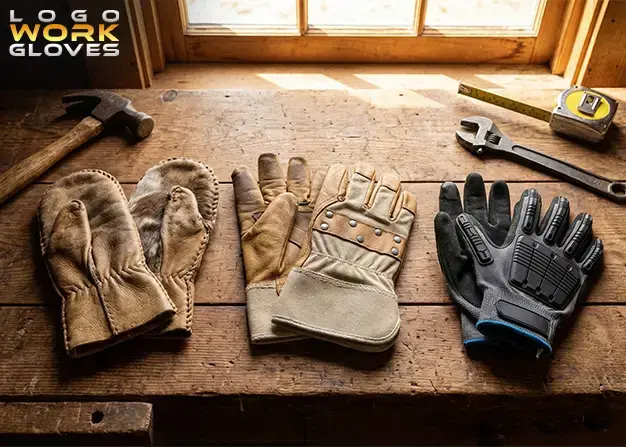
When we talk about work gloves, most people think about construction sites, warehouses, mechanics, or industrial workers. But the truth is, hand protection has been part of human history for thousands of years.
As someone who studies workplace safety equipment and industrial gear, I find it fascinating how something as simple as a glove evolved into one of the most important pieces of personal protective equipment (PPE) used across industries today.
In this article, I’ll walk you through the history of work gloves, how they evolved over time, the materials that shaped them, and why they remain essential for worker safety.
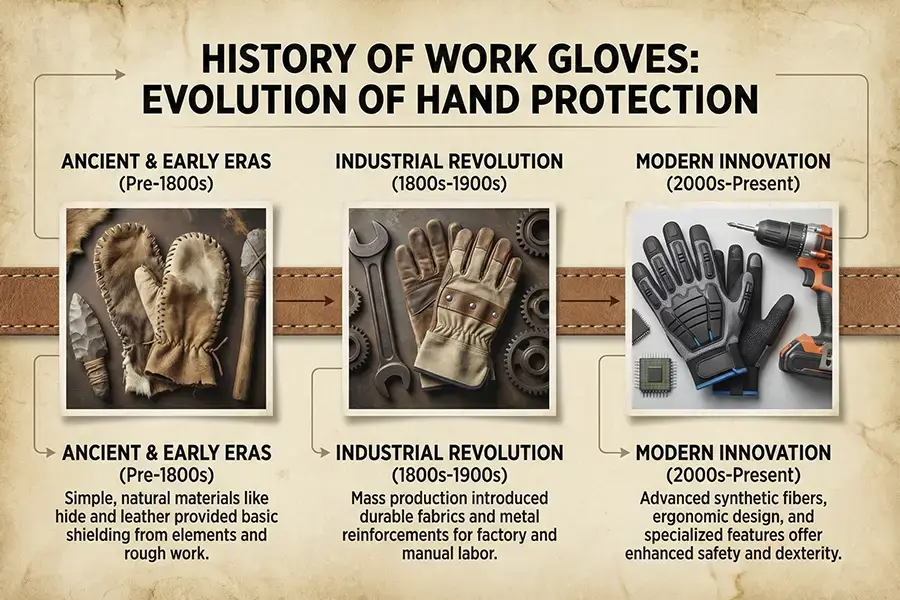
Long before modern industrial safety gloves existed, humans were already looking for ways to protect their hands from cold, friction, and injury. Historians believe the earliest forms of gloves appeared during the Ice Age, when early humans used primitive mittens made from animal skins to protect their hands from freezing temperatures.
Evidence from ancient cave paintings suggests that some form of hand covering existed thousands of years ago. One of the earliest recorded gloves was discovered in the tomb of King Tutankhamun in ancient Egypt. These gloves were made from linen and are believed to have been worn while driving a chariot.
Although they weren’t designed for heavy labor, they demonstrate how early civilizations already understood the importance of hand protection.
As societies advanced, gloves began to serve multiple purposes including work, agriculture, and protection. In ancient Greece, gloves were reportedly used during gardening and agricultural tasks to prevent cuts from thorns and rough plants.
Similarly, the Romans adopted gloves for labor-intensive activities and cold weather protection. Historical writings even mention gloves being used in political situations.
According to historical accounts, a glove filled with silver coins was used as a bribe in ancient times showing that gloves were already common objects in daily life. During this period, gloves were not yet specialized industrial work gloves, but they laid the foundation for the protective gear we use today.
During the Middle Ages, gloves became more specialized and were used in both manual labor and combat. Knights wore metal gauntlets as part of their armor to protect their hands during battle. Meanwhile, craftsmen such as blacksmiths, farmers, and builders used thick leather gloves to shield their hands from heat, sparks, and rough materials.
This era also saw the rise of glove-making guilds, where skilled craftsmen specialized in producing gloves using leather, wool, and linen. These guilds helped standardize glove manufacturing and improved glove durability and craftsmanship. While gloves were practical tools for workers, they also became symbols of status and fashion among the wealthy.
The Industrial Revolution in the 18th and 19th centuries changed everything. As factories, railroads, and large-scale manufacturing grew, workplace injuries also increased. Workers handling heavy machinery, tools, and materials faced serious risks such as cuts, burns, and abrasions.
This period marked the beginning of gloves being designed specifically for industrial safety.
Leather gloves became widely used in industries such as:
In 1896, one of the early patents for modern work gloves was introduced to improve comfort and durability for railroad workers and laborers. The design featured improvements like seamless palms, which reduced friction and increased comfort during long hours of manual work.
These latest innovations in work gloves have become an essential part of worker protection equipment.
As technology advanced in the 20th century, so did the materials used to manufacture gloves. New materials were introduced to improve protection against specific hazards.
Common materials used in modern work gloves include:
During this time, workplace safety regulations also began to evolve. Organizations introduced safety standards for personal protective equipment (PPE) to reduce occupational injuries.
Industries such as manufacturing, automotive, welding, and construction started requiring workers to wear protective gloves as part of standard safety protocols.
Today, work gloves are far more advanced than their early counterparts.
Modern designs combine ergonomic comfort, advanced materials, and specialized protection for different industries.
Some of the most common types of modern safety gloves include:
Many gloves now include features such as:
These innovations allow workers to maintain dexterity, grip, and comfort while staying protected on the job.
Despite advances in machinery and automation, hand injuries remain one of the most common workplace injuries.
Properly designed work gloves help protect against:
Across industries such as construction, logistics, manufacturing, oil and gas, and agriculture, gloves continue to play a critical role in workplace safety.
At the end of the day, work gloves are more than just accessories they are essential tools that protect the most important tools workers have: their hands.
Looking ahead, the future of work gloves is focused on smart materials and wearable technology.
Researchers and manufacturers are exploring innovations such as:
These developments will continue to improve worker safety, productivity, and comfort in demanding environments.
From ancient mittens made of animal skin to today’s high-performance industrial safety gloves, the evolution of work gloves tells an incredible story about human innovation and worker protection. As industries continue to grow and evolve, so will the technology behind protective work gloves.
At LogoWorkGloves, we understand the importance of combining safety, durability, and innovation in every pair of gloves designed for hardworking professionals.. And while the materials and designs may change, the goal will always remain the same:
keeping workers’ hands safe while they get the job done.