

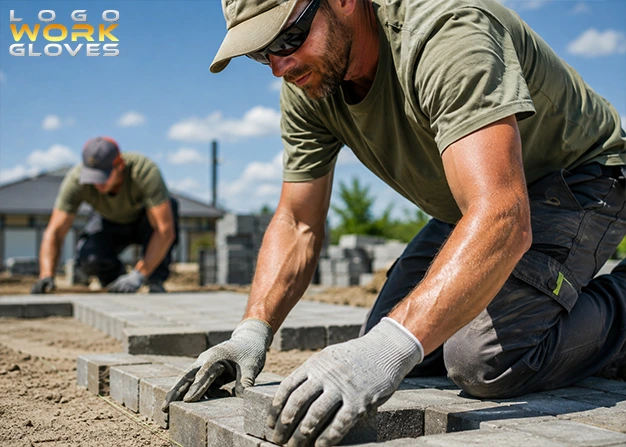
By 10 a.m. in July, the gloves are already off. Not because the job finished, but because the crew’s hands are soaked, the grip has gone slick, and nobody wants to put a wet liner back on. Every safety manager has watched it happen.
The best work gloves for hot weather solve that problem at the design level. They pair a breathable knit or mesh back with a porous palm coating, use a moisture wicking liner that moves sweat outward instead of trapping it, and fit snugly enough that they never bunch. A 13-gauge nylon shell with a micro-foam nitrile palm is the most reliable starting point for general summer work. Heavier full-dip and thick leather styles trap heat and belong in cooler months.
At Logo Work Gloves, we have been supplying crews with branded hand protection since 1992, and the summer conversation is always the same: how do we get people to actually keep the gloves on? This guide breaks down materials, coatings, liners, cuffs, and job matching, then covers how to put your logo on gloves that survive a full season of sweat and sun.
Job hazard determines glove selection first and heat comfort second, because a ventilated glove that fails the hazard assessment is not a safety product regardless of how pleasant it feels.
| Work environment | Recommended summer construction | Priority |
|---|---|---|
| General construction and labor | 13-gauge nylon shell, micro-foam nitrile palm, knit wrist | Grip plus abrasion resistance |
| Warehouse and logistics | 15-gauge nylon or polyester, polyurethane palm | Dexterity and all-day comfort |
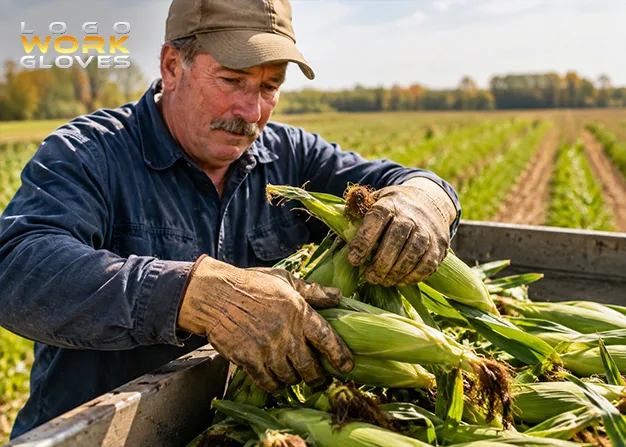
| Landscaping and agriculture | Nitrile foam palm, mesh back, terry sweat wipe | Thorn and abrasion protection, airflow |
| Automotive and mechanical | Synthetic leather palm, spandex mesh back, touchscreen fingertips | Oil grip and tactile feel |
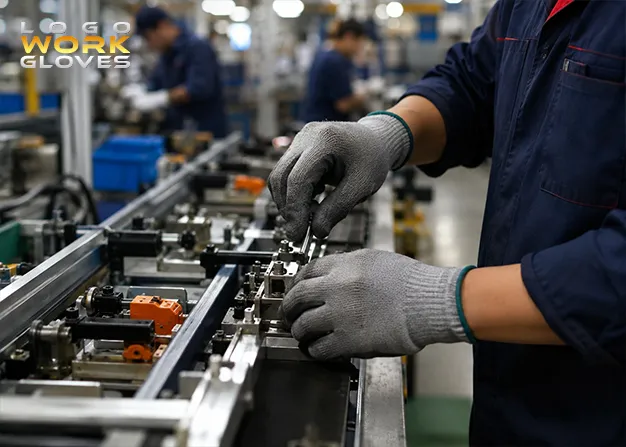
| Assembly and inspection | 18-gauge shell, polyurethane fingertip dip | Maximum precision |
| Glass, sheet metal, blade handling | HPPE or engineered yarn shell, foam nitrile palm | Cut resistance without bulk |
| Roadside, utility, night crews | Hi-vis knit shell, reflective detail, foam palm | Visibility plus ventilation |
Crews in construction, agriculture, and automotive work face different hazards even on the same hot afternoon, and each of those category pages breaks the options down by task.
Yes. Engineered cut-resistant yarns including HPPE are inherently cool to the touch and can be knit at 13 or 18 gauge, which delivers ANSI cut protection in a thin, ventilated glove. This is one of the most useful advances for summer safety, because crews handling sheet metal or glass no longer have to choose between cut resistance and heat tolerance. Our custom anti cut resistant gloves are available in lightweight, summer-appropriate constructions.
One caution worth stating plainly: a lightweight general-purpose glove is not automatically cut-resistant, puncture-resistant, chemical-resistant, or safe for handling hot materials. Match the glove to the documented hazard, not to the weather alone.
Hot weather hand protection fails when a glove blocks evaporation, because evaporation is the body’s primary cooling mechanism, which means a sealed glove turns a worker’s hand into a sauna and turns the glove into something they take off. Every design decision below traces back to that single chain.
Hands carry a very high density of sweat glands relative to their surface area, but they have limited capacity to shed heat once enclosed. A non-breathable shell holds that moisture against the skin. Grip degrades, skin softens and blisters, and the glove starts to smell within days.
Most glove marketing treats breathability as one feature. Ansell’s technical guidance splits it into two measurable properties, and understanding the difference is what separates a good purchase from a guess.
Air permeability measures how easily air moves through the material. This produces the immediate cooling sensation. Mesh panels, ventilation holes, and open knit backs drive this number.
Moisture Vapor Transmission Rate (MVTR) measures how effectively sweat vapor passes out through the material. This governs how the glove performs across a full eight-hour shift rather than the first twenty minutes.
A glove with high airflow and poor MVTR feels great at 8 a.m. and is a wet sponge by noon. A glove with both is what you want. In practice, that combination looks like an open knit shell with a foam-structured coating on the palm only.
Sweaty hands inside gloves reduce grip friction, which increases the force a worker must apply to hold a tool, which accelerates hand fatigue and raises the odds of a slip. That is the mechanism. The comfort complaint and the incident report are the same story at different stages.
There is also a skin health chain. Prolonged moisture softens and macerates skin, which produces blisters and chafing, which makes wearing any glove painful, which produces a worker who stops wearing gloves entirely. A common scenario on landscaping and utility crews is a worker who developed a hot spot in week one of a heat wave and then spent the next six weeks bare-handed.
Material choice determines summer glove performance more than any other variable, because the shell governs airflow, the coating governs both grip and moisture escape, and the liner governs how sweat behaves against the skin.
Gauge refers to the number of stitches per inch in a knit shell. A higher gauge means a finer, thinner, more flexible knit. A 13-gauge nylon shell is the workhorse of summer hand protection: thin enough for real dexterity, open enough for airflow, and durable enough for daily handling. An 18-gauge shell goes finer still for precision tasks, while 10-gauge feels bulky and hot by comparison.
Nylon resists abrasion and holds its shape after repeated washing. Adding spandex to the back panel gives the glove stretch so it moves with the hand instead of bunching at the knuckles, and stretch is what lets you size a glove snugly without restricting circulation. Our custom knit gloves are built on this shell construction and are the most requested style once temperatures climb.
The coating is where most summer glove purchases go wrong. A solid, smooth, full-hand dip seals moisture in completely.
Micro-foam nitrile is the best general answer for hot weather. The foaming process creates an open-cell structure that grips oily and damp surfaces while still allowing air and moisture vapor to pass through. Apply it to the palm and fingers only, leaving the back of the hand open, and you have the classic hot weather configuration. Our custom dip gloves include foam nitrile options built exactly this way.
Polyurethane goes on thinner and lighter than nitrile and delivers the closest thing to bare-hand feel. Polyurethane is the right call for small parts assembly, electronics, inspection, and finishing work where tactile sensitivity outranks abrasion resistance.
Latex provides excellent grip and toughness, particularly in crinkle finishes, but a heavyweight latex dip is a heat trap. Reserve custom latex gloves for wet, rough handling where grip strength genuinely outranks ventilation, and choose the lightweight versions in summer.
Full smooth dips of any polymer should be treated as a cool-weather or chemical-handling choice. They seal the hand.
Cotton breathes naturally and costs very little, which makes lightweight custom cotton gloves a strong fit for light material handling, inspection, event crews, and any operation that replaces gloves frequently. Cotton absorbs sweat rather than wicking it, so cotton saturates faster than engineered synthetics. The practical workaround is volume: issue two or three pairs per worker per day and let each pair dry out between rotations.
Leather is not automatically disqualified in summer. The hide type matters. Goatskin and sheepskin have finer fiber structures than cowhide and let moisture escape faster, which is why unlined goatskin driver styles remain popular with utility, ranch, and delivery crews through August. Our custom driver gloves come unlined for exactly this reason.
For crews that need more palm durability, custom leather palm gloves with a canvas or knit back split the difference: tough where the wear happens, ventilated across the back of the hand. To compare hide types and weights across the full range, browse our leather gloves custom selection.
A summer glove earns its keep through four components working together, because airflow enters through the back, moisture leaves through the liner, protection sits on the palm, and the cuff decides whether any of it stays in place.
The back of the hand is your primary heat escape route. Look for open knit, mesh panels, or perforations positioned directly behind the knuckles where blood flow is highest. Some manufacturers quantify airflow improvements with specific percentages, which is a far better signal than a vague “breathable design” claim.
Spandex and mesh backs are standard on modern mechanic-style gloves, and many pair the vented back with a terry cloth sweat wipe on the thumb. That small detail matters more than it sounds: a worker who can wipe their forehead without removing a glove keeps the glove on. Our custom mechanic gloves are built around this back-of-hand ventilation approach.
Glove liner material determines whether sweat sits or moves. A moisture wicking liner uses fiber geometry and surface treatment to pull liquid sweat away from skin toward the outer surface, where it can evaporate.
Seamless knit liners outperform sewn liners in heat for a simple reason: no internal seam means no concentrated friction point, and friction plus moisture is the exact recipe for blisters. If you are specifying gloves for a crew, seamless liner construction is worth the small price difference.
Avoid brushed or fleeced interior liners entirely in summer. Those liners are engineered to hold warm air, which is precisely the wrong behavior in July.
Knit wrist is the summer default. A knit wrist seals out debris, stays put during repetitive motion, and adds no bulk. The tradeoff is slightly restricted airflow at the wrist.
Open cuff or slip-on maximizes airflow and lets a worker pull the glove off in one motion during a break. Best for jobs with frequent glove on and off cycles, worst for dusty environments.
Safety cuff is a stiff flared cuff that releases fast in an emergency and vents well. Common on leather palm styles for construction and utility work.
Hook-and-loop closure lets each worker dial in fit, which matters more in summer than winter, because a loose glove and a wet hand together produce the worst grip of any combination.
High visibility gloves earn their place in summer because longer daylight hours push crews into more roadside, utility, and traffic-adjacent work, and hand signals are only useful when they are seen.
Fluorescent yellow and orange knit shells are available in the same breathable 13-gauge constructions as standard gloves, so visibility costs nothing in airflow. For flagging, signaling, and equipment spotting, the hands are the communication channel, which makes custom high visibility gloves a functional safety item rather than a cosmetic one.
Hi-vis colors also make glove compliance visible to a supervisor at fifty yards. If you cannot see gloves on hands from across the site, you cannot manage the problem.-
Glove selection belongs in a heat illness prevention plan because clothing and Personal Protective Equipment directly affect a worker’s ability to dissipate heat, which means the PPE you issue changes the exposure limit that applies to your crew.
This is not a theoretical connection. In OSHA’s rulemaking background documentation on heat injury and illness prevention, PPE and clothing appear among the contributing risk factors for heat injury alongside physical exertion and lack of acclimatization. NIOSH exposure limits are explicitly lowered for workers wearing clothing that inhibits heat dissipation.
The scale of occupational heat exposure is well documented. According to Bureau of Labor Statistics Census of Fatal Occupational Injuries data cited in OSHA’s rulemaking record, environmental heat exposure killed 999 U.S. workers between 1992 and 2021, averaging roughly 33 fatalities per year.
NIOSH published its updated Criteria for a Recommended Standard: Occupational Exposure to Heat and Hot Environments in 2016, establishing Recommended Alert Limits for unacclimatized workers and Recommended Exposure Limits for acclimatized workers. A CDC review of OSHA-investigated outdoor heat illness cases from 2011 to 2016 found the NIOSH limits detected 100 percent of fatal heat stress cases, with estimated effective WBGT in those incidents ranging from 79°F to 94°F.
OSHA has also maintained a National Emphasis Program for outdoor and indoor heat-related hazards, using OSHA and Bureau of Labor Statistics data to direct inspections toward the highest-risk industries. Construction, agriculture, and landscaping sit near the top of that list, which is exactly where lightweight safety gloves matter most.
Here is the non-obvious insight most glove buying guides skip. The most protective glove in your storeroom provides zero protection the moment it comes off a hand.
Bureau of Labor Statistics figures widely cited across the safety industry indicate that roughly 70 percent of workers who sustain hand injuries were not wearing gloves at the time, and most of the remaining 30 percent were wearing gloves that were the wrong type, damaged, or poorly fitted. OSHA analysis has attributed roughly 70.9 percent of hand and arm injuries to causes preventable by proper Personal Protective Equipment.
Run that logic forward. If a heavy glove is worn 40 percent of a summer shift and a breathable glove is worn 95 percent of the same shift, the lighter glove delivers more real-world protection despite the lower spec sheet. Comfort is not a luxury line item in summer. Comfort is the delivery mechanism for compliance.
Buying a single glove model for the entire year costs more than running two, because the year-round glove is either too hot in summer or too thin in winter, and in both cases it gets removed, replaced early, or worn while it fails at its job.
The fix is a seasonal rotation. Stock a breathable summer glove and a separate custom winter insulated glove, then swap the storeroom twice a year. Ansell’s guidance on this point is direct: summer and winter gloves require genuinely different features, and one pair cannot serve both effectively.
From real-world purchasing experience, the rotation usually pays for itself. Summer gloves worn on the correct schedule last longer because they are not being soaked and dried repeatedly, and winter gloves stay in inventory through the warm months instead of being destroyed.
Choosing summer gloves works best as a sequence, because starting with comfort produces a glove that fails the hazard, and starting with maximum protection produces a glove nobody wears.
List what the hands contact: abrasion, cut, impact, chemicals, heat, or general handling. This sets your protection floor. Everything after this step optimizes within that floor, never below it.
13-gauge for general work, 15 to 18-gauge for precision tasks, 10-gauge only when abrasion genuinely demands the extra bulk. Higher gauge means cooler and more dexterous.
Micro-foam nitrile for general use, polyurethane for precision, lightweight latex for wet grip. Specify palm-and-fingers coverage rather than a full dip so the back of the hand stays open.
Seamless knit liner, moisture wicking treatment, mesh or open knit back. No brushed interiors.
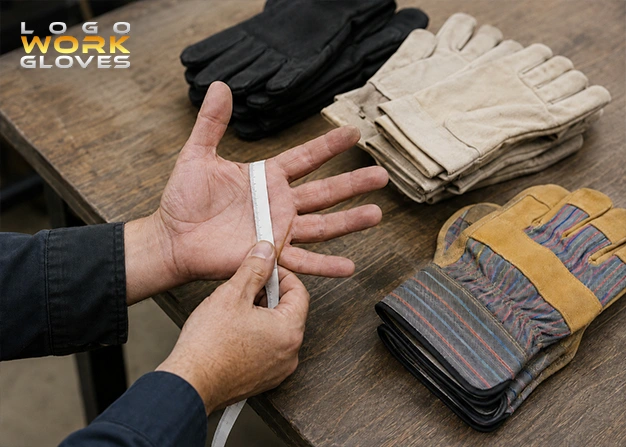
Snug, not tight. A glove that slides on a sweaty hand is a dropped tool waiting to happen. Offering three or four sizes across a crew costs almost nothing and eliminates the single most common fit complaint. We let customers mix and match sizes and styles within one order for exactly this reason.
Order samples, put them on the actual crew doing the actual job for a week, and ask one question: did you keep them on? That answer predicts injury outcomes better than any spec sheet. We ship free samples the same day so you can run this test before placing a bulk order.
Custom branding works on summer gloves because knit and coated shells accept durable logo application, which turns required Personal Protective Equipment into visible team identity without adding a single gram of weight or blocking any airflow.
There is a practical safety angle to branding that gets overlooked. Branded gloves are traceable. When every pair on site carries your mark, gloves stop wandering between crews and subcontractors, replacement cycles become measurable, and compliance becomes visible at a glance.
We offer three application methods depending on glove material. Debossing presses a heated plate into full-grain leather, creating a crisp indent without changing the leather’s color or making it brittle. Heat transfer applies a durable full-color graphic directly to the back of the glove. Direct printing works well on knit and coated shells. Our custom embroidered work gloves page covers the options in detail.
Ordering is straightforward. Initial orders start at 12 dozen, mixed across sizes and styles as you like, with a one-time $95 setup fee per logo. After that we keep your artwork on file, so reorders can be as small as a couple of dozen with no additional setup charge. Request a free proof and you will see your logo on the glove before anything goes into production.
The best work gloves for hot weather combine a lightweight knit shell, typically 13-gauge nylon with spandex, a breathable micro-foam nitrile or polyurethane palm coating covering only the palm and fingers, a seamless moisture wicking liner, and a snug fit. This construction maintains grip and dexterity while letting heat and sweat escape.
Hands contain a high density of sweat glands but have limited ability to shed heat once enclosed. When a glove blocks evaporation, sweat has nowhere to go and accumulates against the skin. Gloves with open knit backs, mesh panels, and porous foam coatings restore evaporation, which is the body’s main cooling mechanism.
Micro-foam nitrile is better for general summer work because nitrile offers stronger abrasion resistance and better grip on oily surfaces while remaining porous. Polyurethane is better for precision tasks because polyurethane is thinner and gives a near bare-hand tactile feel, though it wears out faster under heavy abrasion.
OSHA does not mandate a specific summer glove model. OSHA requires employers to assess workplace hazards and provide appropriate Personal Protective Equipment, and OSHA heat guidance recognizes that clothing and PPE affect heat dissipation. NIOSH exposure limits are lowered for workers whose gear inhibits cooling, so glove selection should be part of your heat stress plan.
Yes. Engineered yarns such as HPPE deliver ANSI-rated cut protection in thin 13 to 18-gauge knits that feel cool against the skin. Paired with a foam nitrile palm and an uncoated back, these gloves provide serious cut resistance with airflow comparable to a general-purpose summer glove.
The best work gloves for hot weather are the ones your crew still has on at 4 p.m. Breathability, seamless liners, palm-only coatings, and correct sizing are not comfort upgrades, they are what converts a glove in the storeroom into protection on a hand. Given that most hand injuries happen to workers who were not wearing gloves at all, the comfort decision and the safety decision turn out to be the same decision.
Start by documenting your hazards, then work down through shell gauge, coating, liner, and cuff. Trial the finalists with your actual crew for a week before buying in volume. And build a seasonal rotation instead of forcing one glove to cover both a January morning and a July afternoon.
Logo Work Gloves has been supplying branded hand protection to American crews since 1992, and we are glad to talk through your specific application before you order. Browse our full product range, learn more about our team, or contact us at 888-804-2925 and we will get samples out the same day.

Thank You