
Ask any foreman what gets tossed out of the truck bin on a Friday afternoon and gloves are near the top of the list. Torn palms, soaked knit backs, fingertips shredded by a hawthorn hedge. If you run a grounds crew, you already know the wrong pair costs you twice: once at the supply counter, and again in downtime when somebody catches a thorn and has to go get it dug out.
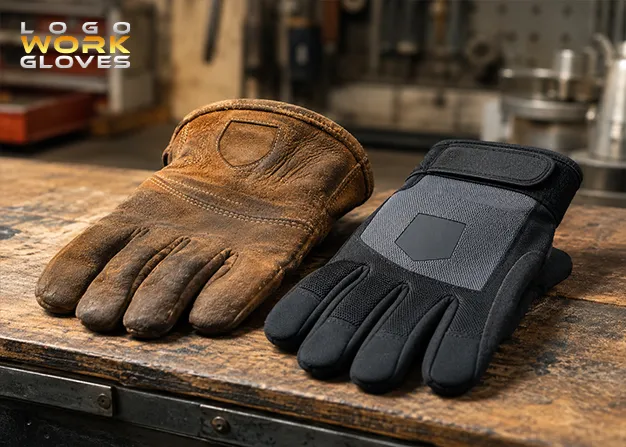
Here is the short answer. The best gloves for landscaping are not one glove. Most crews run two: a nitrile or polyurethane coated knit for mowing, trimming, blowing and general handling, plus a leather palm or leather driver glove for pruning, brush, thorns and hardscape. A crew running that pair covers roughly ninety percent of a season’s tasks without paying for protection they will never use.
At Logo Work Gloves LLC we have been private labeling work gloves since 1992, and landscaping companies are some of our most loyal repeat customers. Below is exactly what we tell them when they call.
Landscaping work gloves fail for predictable reasons, because grounds maintenance stacks four different hazards into a single shift that no one material handles perfectly.
Those four hazards are:
A glove built to solve all four at once becomes too thick to tie a tarp or work a trimmer trigger. That is why task matching beats buying one heavy duty glove for the whole crew.
In practice: the crew members who complain loudest about gloves are usually the ones handed a stiff, thick pair for detail work. They pull them off, and then they work bare handed. A glove nobody wears protects nobody. If your operation also runs nursery, farm or orchard accounts, our custom agricultural gloves page covers the same hazard set for that side of the business.
Coating material determines grip, breathability and wear life more than any other single spec, because the coating is the layer that meets the world.
| Material | Grip on wet grass | Puncture resistance | Breathability | Best landscaping use |
|---|---|---|---|---|
| Foam Nitrile | Excellent | Good | Good | Mowing, trimming, mulch, general handling |
| Smooth Nitrile | Good | Good | Good | Wet, dirty work where easy cleaning matters |
| Polyurethane | Good, close to bare skin | Fair | Excellent | Hot weather, irrigation, planting and detail work |
| Latex crinkle | Very good | Good | Fair | Wet conditions, rough handling, hardscape |
| Cowhide leather palm | Fair | Very good | Good | Brush clearing, thorns, stone, loading |
| Pigskin or goatskin driver | Fair | Very good | Very good | Pruning, hand tools, tasks needing dexterity |
A few notes worth knowing before you order.
Nitrile is the workhorse coating of the Green Industry. Foam nitrile pulls oil and moisture away from the contact surface, which is precisely why it holds on a dew soaked mower handle. The tradeoff is that foam texture traps dirt, so the gloves look filthy long before they are actually worn out. Our custom dip gloves cover both the foam and smooth nitrile options in bulk.
Polyurethane is the coolest running coating we sell. It is thin, it conducts heat away from the hand, and it gives a grip that feels close to bare skin. For August in the South, PU coated knits keep crews from stripping their gloves off by ten in the morning. They will not survive stone work, so treat them as a task glove rather than a fleet glove.
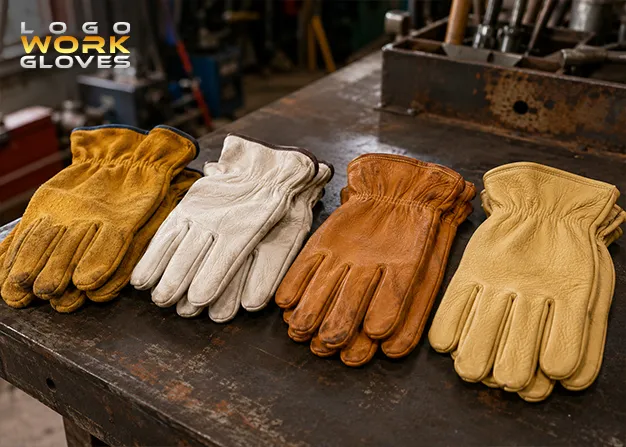
Leather still wins on punctures. A shoulder split cowhide palm puts real material between a thorn and your hand, and it pads the palm at the same time. Our custom leather palm gloves run with safety cuffs, which also keeps mulch and brush chips out of the sleeve.
Task based selection outperforms buying a single glove for everyone, because each landscaping task loads a different part of the hand.
| Task | Recommended glove | Why it wins |
|---|---|---|
| Mowing and edging | Foam nitrile coated knit | Grip on wet handles, thin enough for controls, low heat build up |
| String and hedge trimming | Padded palm mechanic style | Palm padding plus full finger coverage against vibration |
| Pruning and brush clearing | Leather driver or leather palm | Thorn puncture resistance across palm, fingers and back of hand |
| Mulch and bed work | Polyurethane or smooth nitrile | Dexterity, easy rinse off, cool in summer |
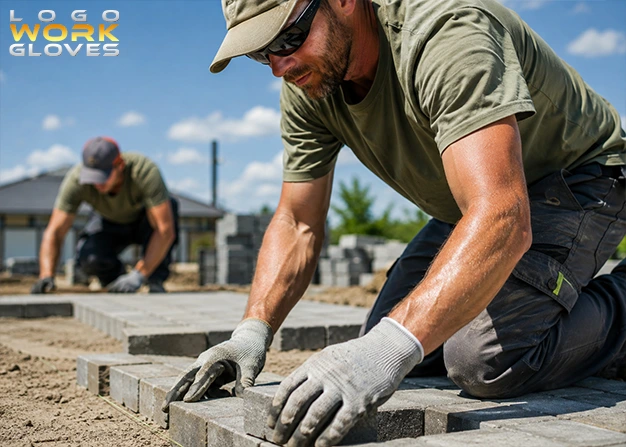
| Hardscape and stone | Latex crinkle or heavy leather palm | Abrasion resistance plus padding against pressure points |
| Roadside and median work | High visibility coated glove | Hand signals stay visible to passing traffic |
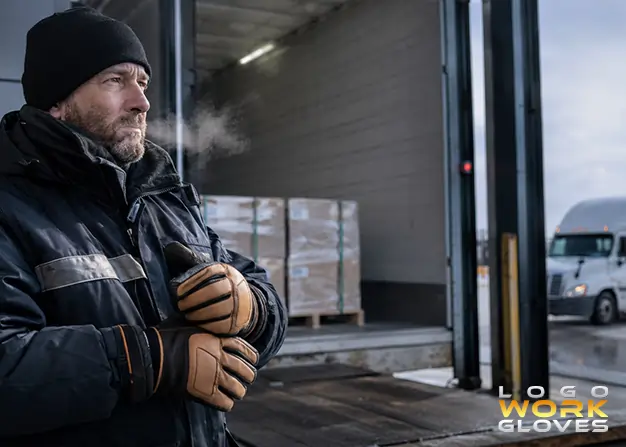
| Fall cleanup and cold mornings | Insulated coated glove | Warm hands grip better and fatigue slower |
For crews working right of way, medians or anywhere near moving traffic, hand visibility is part of the safety picture rather than a nice to have. Our custom high visibility gloves are the pair we point those crews toward. Once leaf season arrives and the mornings turn, a set of custom winter insulated gloves keeps grip strength up on frozen equipment handles.
No glove is literally thorn proof, and any supplier who tells you otherwise is selling you a story. What thorn proof work gloves actually deliver is high puncture resistance measured against a defined test, plus coverage in the places thorns actually reach.
Two things matter more than the marketing claim.
The ANSI/ISEA 105 standard rates puncture from zero to five using a stylus pressed through the glove material. For rose beds, blackberry, hawthorn and locust, a rating of three or higher on a leather or reinforced palm is a sensible floor. Our custom driver gloves in pigskin and goatskin are the style most pruning crews settle on, because they protect all the way around while still letting a technician work a pair of bypass pruners.
Vibration from trimmers and other handheld equipment causes hand arm vibration syndrome (HAVS) because sustained oscillation damages nerves and blood vessels in the fingers, which means numbness and cold sensitivity show up long before any visible injury does.
Here is the part most glove buyers get wrong. ISO 10819 is the international test method for anti vibration gloves, and it measures vibration transmitted through the glove to the palm across frequencies from 25 Hz to 1250 Hz. Certification requires the vibration reducing material to cover the palm, the fingers and the thumb. That last detail matters enormously, because HAVS begins in the fingertips rather than the palm. A glove with a thick gel pad in the palm and thin fabric fingers is not doing the job it appears to be doing.
NIOSH and safety practitioners consistently rank gloves as the least preferred control for vibration. The controls that work better, in order:
For crews on trimmers all day, a padded synthetic leather palm with articulated fingers is the realistic choice. Our custom mechanic gloves are built on that pattern, with palm padding and a flexible back that survives repeated washing.
Grip on wet surfaces is determined almost entirely by palm coating texture, because texture creates channels that push water out of the contact patch the same way a tire tread does.
A common scenario: a crew starts at seven in the morning on soaked turf, and by noon it is ninety degrees and bone dry. That crew is better served by two sets in the truck than one compromise glove. Lightweight custom knit gloves make an inexpensive second set for the afternoon half of the day.
Hand protection for a landscaping company is a regulatory obligation rather than a perk, because OSHA places the duty of assessment and provision on the employer instead of the worker.
OSHA standard 1910.138 requires employers to select and require appropriate hand protection wherever workers face hazards including cuts, abrasions, punctures, chemical absorption and harmful temperature extremes. Selection has to follow a documented hazard assessment, and it follows the hierarchy of controls: engineer the hazard out first, then guard, then use administrative controls, then Personal Protective Equipment.
For a grounds maintenance operation, that assessment realistically covers pruning and brush, herbicide and fertilizer handling, equipment maintenance, hardscape material handling and cold weather work. Write it down. If an inspector asks how you chose your gloves, “they were on sale” is not an answer.
ANSI/ISEA 105 is the American classification standard for hand and arm protection, revised in November 2024 by the International Safety Equipment Association. The 2024 edition introduced a standardized pentagon pictogram so that every manufacturer displays performance the same way.
What you will see on the label:
For most landscaping tasks, A2 to A4 cut with a puncture level of 3 or better is a sensible target. Crews handling metal edging, broken glass on cleanups or recycled hardscape material should step up a level or two. Our custom anti cut resistant gloves cover the higher cut ratings for those crews.
Fit and features decide whether gloves get worn, because a technician who has to peel a glove off ten times a day will eventually stop putting it back on.
A structured glove program lowers cost per hour worked, because standardization removes the impulse purchases and mismatched pairs that quietly drain a supply budget.
Have each crew note which glove they wore and what destroyed it. You will usually find that one or two failure modes account for most of the loss.
One coated knit for equipment and general work, one leather for brush and thorns. Resist adding a third until the first two prove insufficient.
Most landscaping crews go through a pair of coated knits every two to four weeks in season, and a pair of leather every two to three months. Budget on that basis instead of reordering in a panic.
Bulk ordering is where cost per pair drops meaningfully. Mixing sizes within one order is standard practice with us, so a whole crew can be outfitted properly on a single purchase order.
More on that below, and it is not simply vanity.
Branded gloves improve both jobsite professionalism and inventory control, because a glove carrying your company mark is visibly company property rather than an anonymous pair that walks off.
Three reasons our landscaping clients give us:
Logo Work Gloves LLC prints two ways. A branded and debossed logo presses a heated plate into full grain leather for a clean, permanent indent. A full color heat transfer sits on the back of the glove for maximum visibility. The cost is the same either way, printing is included in the price per pair, and there is no upcharge for multiple colors. Our custom embroidered work gloves page walks through the branding options in detail, and you can send artwork through our free proof form to see your logo on a glove before committing to anything.
The best gloves for landscaping crews are foam nitrile coated knit gloves for mowing, trimming and general handling, paired with cowhide or pigskin leather gloves for pruning, thorns and hardscape. This two glove system covers most grounds maintenance tasks while keeping dexterity high and cost per pair low.
No glove is fully thorn proof. Gloves marketed that way offer high puncture resistance, typically leather palms rated level 3 or higher under ANSI/ISEA 105. Coverage matters as much as the rating, since most thorn injuries occur on the back of the hand, which coated knit gloves leave unprotected.
Anti vibration gloves help modestly, and only when certified to ISO 10819, which requires vibration reducing material across the palm, fingers and thumb. Because hand arm vibration syndrome begins in the fingertips, palm only gel padding offers limited real protection. Equipment maintenance and job rotation reduce exposure far more effectively.
OSHA standard 1910.138 requires employers to conduct a hazard assessment and provide appropriate hand protection wherever hazards such as cuts, punctures, abrasions and chemical absorption exist. Landscaping and grounds maintenance work routinely presents those hazards, so documented glove selection is a compliance obligation for the employer.
Coated knit gloves typically last two to four weeks of full time seasonal use, while quality leather gloves last two to three months. Replace any glove with a worn through palm, a torn fingertip or embedded debris, since a compromised glove offers less protection than crews assume it does.
Initial orders start at 12 dozen pairs, and you can mix sizes and styles freely within that minimum. Reorders can be as small as a few dozen because we keep your logo on file. There is a one time setup fee per logo, with no additional charge on repeat orders.
Choosing the best gloves for landscaping comes down to three decisions: match the coating to the moisture, match the material to the puncture risk, and give your trimmer operators full finger padding rather than a palm pad that only looks protective. Add ANSI/ISEA 105 ratings to your purchase specs and a documented hazard assessment to your safety file, and your glove program stops being an expense line and starts working as a control.
The last piece is the one that pays you back. Put your logo on them. A crew in matched, branded gloves looks like the kind of company a homeowner wants back next spring, and a glove that carries your mark tends to stay with your company rather than disappearing into a truck bed.
If you want to see how your logo would sit on a leather driver or a nitrile dip, send your artwork to Logo Work Gloves LLC and we will send back a PDF proof at no cost. Browse the full lineup on our products page, or contact us and we will help you spec a two glove system for your crews before the season starts.

Thank You